
Finding clients lets you grow your income as a freelancer. More clients mean more projects, and more projects mean a steadier flow of money. It also gives you leverage. Instead of taking whatever comes your way, you can choose better clients. Knowing how to find more freelance writing clients becomes the difference between surviving and thriving.
But if you struggle to get more writing clients, you’re not alone. When I first started freelancing, I ran into one big problem – my income was all over the place. Some days I made good money. Most days, I made about as much as a fry cook at McDonald’s. The reason was simple: I didn’t have enough clients.
And the question that haunted me was: how do I actually find them?
In this guide, I share the ways I use to find clients consistently. They’re simple and repeatable. I will even show it step by step. Let’s dive in.
Key Takeaways
Instead of randomly reaching out to prospects, use this systematic approach that delivers consistent results.
- Build a multi-channel client acquisition system – Combine job boards, cold pitching, referrals, and content marketing rather than relying on just one method.
- Leverage your existing network for referrals – 89% of successful freelance writers cite referrals as their top client source, yet most writers never ask.
- Follow up strategically with prospects – 50% of sales happen after the fifth follow-up, but 48% of freelancers never follow up at all.
The most successful freelance writers don’t wait for their websites or portfolios to be perfect. Instead, they start with what they have and improve while earning. Your systematic approach to client acquisition, combined with consistent action, will add up over time to create a sustainable freelance writing business.
Build Your Foundation Before Reaching Out
Understanding how to find more freelance writing clients starts with building a solid foundation before you reach out to prospects. This simple preparation will set you up for long-term success. Your client search becomes easier when you define your market position.
Define your niche and ideal client
The most important step in growing your freelance writing business is to choose a niche. When clients see you as the go-to person for something specific, you can charge more. This specialization is fundamental to how to find more freelance writing clients effectively. Let’s say you owned a law firm and needed blog content. Would you hire a general writer or one who specializes in creating blog posts for legal firms? The specialist wins.
Consider these three factors when picking your niche:
- Something you know well or are curious to learn more about
- Something clients need and pay for
- Something you enjoy writing about
Kaleigh Moore, a freelance content writer who hit six figures, says the key is specialization. The biggest earners don’t write about everything. They pick a niche and own it. When clients see you as the go-to person for something specific, you can charge more.
Besides your niche, you need to know your ideal client type. Who do you want to work with? Are they B2B companies? The small business owner next door? Female entrepreneurs? Knowing this helps you find clients and deliver specific results for them.
Create a simple but strong portfolio
Your portfolio shows potential clients what you can do. It’s the classic ‘show, don’t tell’. Yet I’ve seen some new freelancers struggling to create one because they don’t have paid work to show. Well, the thing is, you can actually create samples and use them for your portfolio.
Years ago, I landed my first copywriting gig. The funny thing? I had never done one before. So how did I pull it off? Simple – I wrote a sample ad in Google Docs and sent it to the client. He loved it, and that opened the door.
The point is, you don’t need paid work to prove yourself. A simple piece on Google Docs can be enough. As a new freelancer, aim for two or three strong samples that show off your specialty. Write them yourself, for free if needed. The paid work will follow.
Those samples should hit your target client’s problems head-on. Write as if you’re inside their head, saying what they’re already thinking. For example, if you’re targeting web developers, create content around the challenges they face every day. For more specific strategies on what types of portfolio samples to create and how to present them effectively, check out our detailed guide on building a strong freelance portfolio.
Set up a simple website or landing page
Get started with a basic website, even a one-pager is better than nothing. The main goal of your website is simple: start conversations, not close sales. Visitors should instantly know three things – who you are, what you do, and how to reach you.
You don’t need a complex or “perfect” site to make that happen. In fact, chasing perfection often wastes time you could spend finding clients.
A simple page is enough to get started. Think of it as your digital business card – clean, clear, and easy to navigate.
On that page, include a headline that shows your niche. Add a short bio with your photo, your contact details, and samples of your best work. If you have worked with recognizable brands, feature them.
This foundation builds your professional image and makes you look credible. It also helps you attract quality gigs even before you send your first pitch.
Start with Easy Wins: Job Boards and Marketplaces
Getting started on freelancing is difficult, especially when you don’t have a big network yet. This is where job boards and freelance marketplaces come in. They put you right in front of businesses that are looking for your services. If you’re new to freelancing, our guide to the best freelancing platforms for beginners provides essential foundation knowledge before diving into specific job boards.
Top freelance writing job boards to try
Here are some great platforms to try out when it comes to finding writing opportunities:
- ProBlogger Job Board: You can find every writing job here, from part-time to full-time.
- SolidGigs: A team handpicks only the best jobs around the world and sends them to you weekly. You can opt for a 14-day free trial, and it costs only USD49.00/month
- FlexJobs: You can create custom job search profiles specifically for writing. You can try for 14 days at $2.95.
- MediaBistro: No matter what level you are at, you can find writing jobs here in TV, PR/marketing, and publishing.
- Working In Content: Connects companies with content professionals, prioritizing diversity and inclusion no matter what.
Content platforms such as Contena and Writers Work combine higher-quality opportunities too, but at a price – paid subscriptions.
Stand out in crowded listings
Your profiles on these platforms should be a blend of your resume and portfolio. Include a professional headshot, write a detailed bio that shows your expertise, add your best writing samples and display client testimonials.
Read job requirements thoroughly and personalize each application. Present yourself as someone who understands their needs. After that, share relevant work samples and explain how you will solve their problems.
Use platforms like Upwork and Fiverr
What’s the real difference between Upwork and Fiverr? Upwork is built for long-term client relationships. The more you work with repeat clients, the more money you keep.
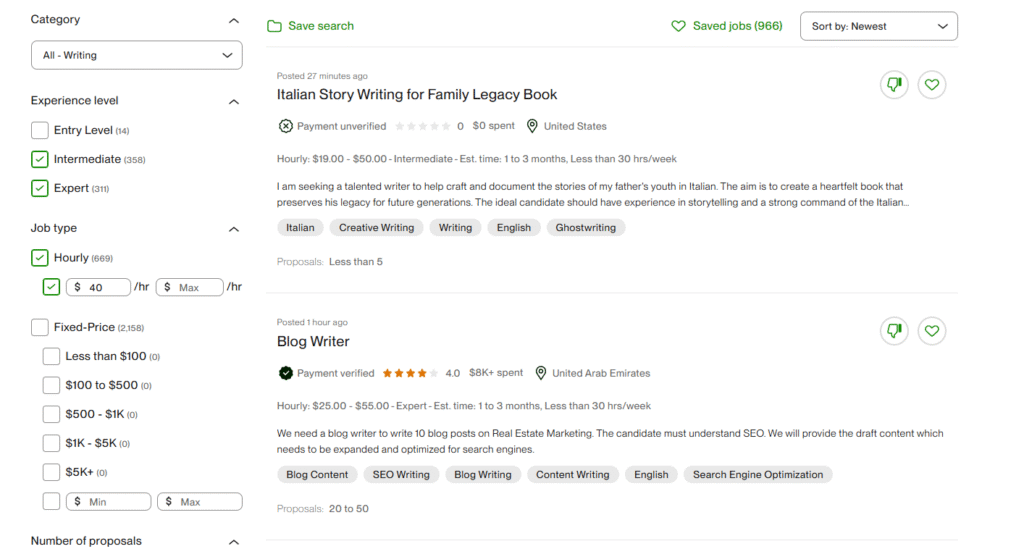
Contracts on Upwork can stay open as long as you and the client want. In fact, Upwork encourages this. If a client opens a new contract, they pay $4.99, even if it’s with you again. That fee makes it easier for both sides to stick with the same contract.
Here’s an example. I’ve had a client on Upwork for months. He runs several blogs and always has articles for me. We keep one contract open, and he pays by approving milestones for each piece. It’s simple and smooth.
But here’s the catch. Upwork has become pickier about who gets in. Popular categories like writing are crowded, and you’ll need “Connects” (which cost money) to send proposals.
Fiverr works differently. Think of it as a boutique. Clients browse your service packages and pick what they need. Fiverr takes a flat 20% of every job. The old $5 gig rule is gone – you set your own prices now.
In short, Upwork is better for bigger, ongoing projects, especially in areas like technical writing. To learn how one writer built a six-figure income on Upwork, read about how Kenny made over $100,000 writing on Upwork. Fiverr shines when you’re offering quick, clearly defined deliverables like taglines or short content pieces.
Pitch Strategically with Email and LinkedIn
The most powerful way to find freelance writing clients? Direct pitching. Proactive outreach lets you have a say in your client acquisition process, unlike passively waiting for a job board response. In fact, mastering how to find more freelance writing clients often comes down to this strategic approach.
According to invespcro.com, 80% of sales happen between the fifth and twelfth contract. If you want to succeed as a freelancer, it is important that you build your email and LinkedIn outreach skills.
Build a targeted prospect list

A focused prospect list will improve your outreach success greatly. You should identify your ideal client type based on your niche specialization. Your spreadsheet should have these elements on it:
- Company name and website
- Contact person’s name and role (marketing manager, publications editors, etc)
- Industry category or specialization
- Notes on their content needs or gaps
You should focus primarily on big corporations because they usually have bigger marketing budgets. To find the right decision maker, try LinkedIn searches, browse company websites, or call the company directly.
Once you’ve identified prospects, organize them by industry, project size, or location. This organization makes your outreach more efficient and helps you tailor your pitches to similar types of businesses.
Write personalized and effective emails
Personalization makes cold emails work. Your subject line should be written with only one person in mind and can only be sent to that person. A strong email has:
- A genuine compliment about their business or recent work
- A clear explanation of your services and how they solve their specific problems
- A simple call-to-action that gets responses quickly
The initial email should be kept short and focus on them. Many freelancers talk themselves out of opportunities before they even get rejected. The value you offer often matters more to potential clients than an immediate sales pitch.
Follow up without being annoying
Strategic follow-ups can supercharge your success rate – 50% of sales happen after the fifth follow-up. Yet all but one of these salespeople never follow up with prospects.
A solid follow-up sequence has:
- First follow-up: 5-7 days after the original email, offer assistance or clarification
- Second follow-up: One week later, remind them of your services briefly.
- Final follow-up: Another week later, state it’s your last message.
LinkedIn outreach should bring you, potential clients and other content creators in your industry together. Skip the immediate pitch in connection requests. Instead, introduce yourself and what you do. This builds future relationships naturally without seeming salesy.
Respond to LinkedIn opportunities
LinkedIn offers opportunities to connect with prospective clients in your niche. Fostering connection through meaningful interactions makes your cold emails more effective. Your prospects might recognize you from previous exchanges after all.
End your email outreach with “I have some extra work capacity for next month. I was wondering if there’s an extra task I could help you with?”. You can choose to follow up with a message asking if they know others who might need help.
Leverage Your Network and Ask for Referrals
Many freelancers believe the best way to earn more is by pitching to strangers. That couldn’t be further from the truth. In reality, new clients often come from your existing network through referrals, yet this remains one of the most overlooked strategies for how to find more freelance writing clients.
Referrals work better than cold outreach for two simple reasons. First, your network already knows what you can do. Second, they already trust you.
Think about it. If you needed to hire someone, would you trust a friend’s recommendation or a complete stranger? Most of us would go with the friend’s pick every time.
Tap into past clients and colleagues
Your network is wider than you think. Past clients, colleagues and former professors could know someone who needs your services.
These simple strategies help maximize your connections:
- Frequent casual check-ins with past clients
- Project follow-ups to monitor writing performance
- Social media engagement to put yourself out there
A successful writer recently revealed that he earned thousands of dollars through referrals from a Facebook Ads expert she met at an event. Active participation in writing groups and industry communities might just land you multiple high-paying opportunities.
Ask for referrals without being pushy
Clients rarely send referrals on their own. Most of the time, they’re just too busy. Or as Kevin McCallister said in Home Alone 2, they don’t forget about you – they just forget to remember you. That’s why you need to ask for referrals every now and then.
Last year, my income dipped because I couldn’t land new clients. So I reached out to a current client I had written an AI article for and asked if she knew anyone else who needed help. She referred me to another client, and today I’m working with both of them.
That simple ask opened the door. Sometimes, all it takes is asking. As the old saying goes, “Ask, and you shall receive.”
Current clients respond best when you:
- Make your request after receiving positive feedback or completing work
- Keep your request clear and simple: “I’m looking to add one or two more clients to my roster this year. If you know another editor who needs a freelancer, please feel free to pass my name along”
- Send customized referrals request emails that are separate from project communications
Attracting More Writing Clients with Content
Creating content builds authority and remains one of the best ways to attract new clients, though many writers don’t use it much.
Guest posting
Guest posting helps you gain mastery in your field and introduces your work to new audiences.
Here are some proven techniques to find opportunities.
- Search Google with operators like “[your niche] + write for us” or “[industry] + guest post guidelines”
- Look at where successful guest bloggers in your niche publish
- Review your competitors’ backlinks to see their guest post locations.
Focus on sites with high domain authority that appeal to your ideal clients.
Start a newsletter
Creating content regularly for your audience builds trust and shows your expertise. A blog or newsletter is a great way to do this. Focus on the problems your ideal clients face and show how you can solve them.
For example, I subscribe to Chris Orzechowski’s newsletter. He’s an email copywriting expert, and his content always tackled the challenges I had as a writer, like growing revenue and scaling a business. His advice hit so close to home that I eventually bought one of his courses.
When you’re starting out, pick one main content channel and pair it with social media. That’s enough to build momentum. Only branch out to other platforms once you have the time and bandwidth. Stretch too thin at the start, and you’ll burn out fast.
Use SEO to get found
Search engine optimization helps clients find you when they search for writers. Place relevant keywords on your site in these places:
- Title tags (page titles visible in search results)
- Headers and subheadings throughout your content
- Meta descriptions (the text under search results)
- Image alt text and file names
Note that keyword stuffing hurts more than it helps. Instead, incorporate keywords naturally.
Repurpose content across platforms
Your content doesn’t have to live in just one format. A blog post can turn into a social media carousel. A video can become an article. A podcast episode can be reshaped into a newsletter.
On an episode of Hot Ones, Gary Vaynerchuk gave the host, Sean Evans, this exact advice. He told him to create an audio version of the show. Then, repurpose each episode into a blog post, a Medium article, or even a LinkedIn post.
Gary put it simply: “It’s about creating the other forms of media.” In other words, squeeze more value out of every piece of content. The same principle applies to freelance writing. And honestly, if it works for Gary Vee, it’ll work for you too.
This approach helps you:
- Reach new audiences across different platforms
- Get more value from work you’ve already done
- Keep a consistent presence without constant creation.
Conclusion
Remember, how to find more freelance writing clients isn’t about perfection; it’s about consistent action, even in small steps. Momentum builds when you keep showing up, reaching out, and putting your work in front of people.
Stay patient, keep refining your approach, and trust the process. Every connection, pitch, or piece of content brings you closer to the clients you want. With steady effort, the results will come.

Aaron Then
Aaron is a freelance content writer on Upwork. He writes about business, freelancing, and thought leadership with a clear, engaging style. When he’s not writing, he’s growing grey oyster mushrooms.